


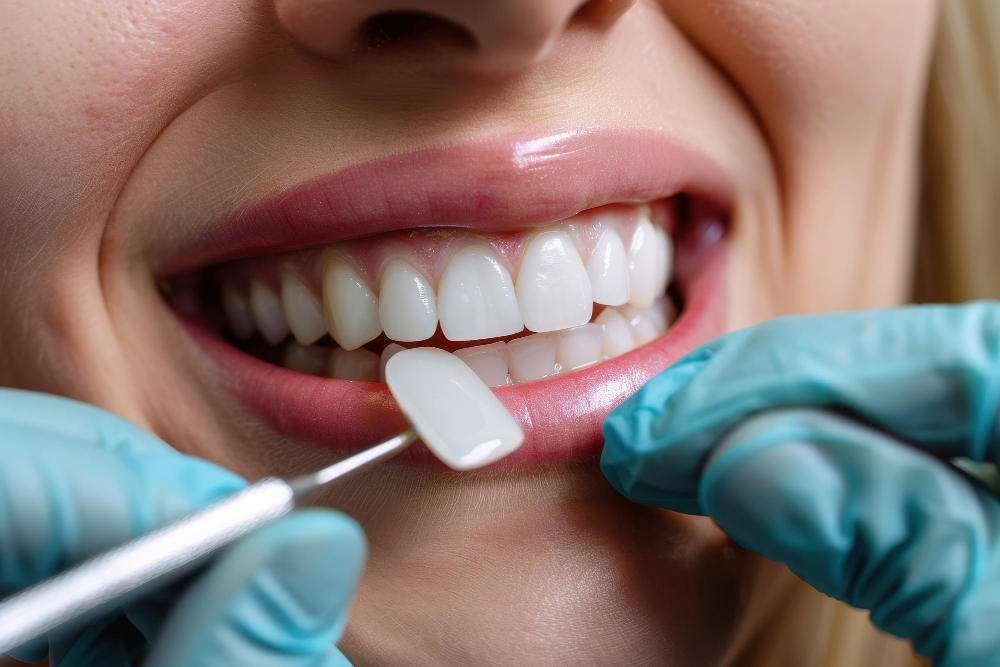
Dental veneers are a popular cosmetic dental option for improving the appearance of your smile by covering imperfections such as stains, chips, or minor misalignment. Options like porcelain, composite, and no-prep veneers offer different benefits depending on your goals and needs. With proper care, veneers can provide long-lasting, natural-looking results, making them a strong choice for patients looking to enhance their smile.
In this guide, we’ll walk you through the basics of dental veneer teeth, what you can expect during the procedure, and how they can transform your smile.
What Are Dental Veneers?
Dental veneers are ultra-thin shells typically crafted from composite resin or porcelain. Dentists bond these shells to the front of the teeth to correct a range of imperfections, including discolored, chipped, or slightly misaligned teeth. Veneers are designed to resemble the natural translucency of tooth enamel, offering a flawless appearance that blends seamlessly with your natural teeth.
Veneers are often used in cosmetic dentistry to help patients achieve a brighter, more symmetrical smile. While the process is largely irreversible, the results are long-lasting, making them a popular choice for those looking to improve the overall appearance of their smile.
Types of Veneers Available
There are several types of veneers, each offering different benefits depending on your needs and goals. The two most common types are porcelain veneers and composite veneers, with a third option being no-prep veneers.
Porcelain Veneers
Porcelain veneers are known for their durability, natural appearance, and stain resistance. These veneers are custom-crafted to fit your teeth and are designed to match the color, shape, and size of your natural teeth. With proper care, porcelain veneers can last anywhere from 10 to 15 years. However, they require some removal of tooth enamel to make space for the veneer.
Composite Veneers
Composite veneers are made from a tooth-colored resin and are generally more affordable than porcelain veneers. These can often be applied in a single visit, making them a convenient option for patients on a tighter schedule.
While composite veneers are not as lasting or stain-resistant as porcelain, this option still significantly enhances the appearance of your smile and can last between 5 to 7 years with proper care.
No-Prep Veneers
No-prep veneers are a newer option that requires little to no removal of tooth enamel. These veneers are ideal for patients with minimal tooth imperfections. They are generally easier to apply but may not be suitable for everyone. No-prep veneers provide a less invasive option but may not offer the same level of customization as porcelain veneers.
The Veneer Process: What to Expect
Getting dental veneers typically involves two visits to the cosmetic dentist. The first visit focuses on consultation, planning, and preparation.
Consultation and Planning
During your initial consultation, the dentist will examine your teeth, discuss your goals, explain the costs of veneers, and determine whether veneers are the right choice for you. The dentist may take impressions or digital scans of your teeth, which will help create a custom veneer that fits your mouth perfectly.
Your dentist will also discuss the best material for your veneers based on factors like your lifestyle, budget, and the severity of your imperfections.
Tooth Preparation
Before applying the veneers, a small amount of enamel is removed from the surface of your teeth. Typically, less than half a millimeter of enamel is shaved off to create space for the veneer. This step is necessary to ensure that the veneers fit properly and appear natural. For patients who are concerned about discomfort, local anesthesia can be used during the procedure.
Temporary Veneers
After preparing your teeth, temporary veneers are often placed while your custom veneers are crafted. These temporary veneers will protect your teeth and give you a feel for how the final veneers will look and feel. It typically takes about one to two weeks for the custom veneers to be created and ready for placement.
Final Bonding
Once your custom veneers are ready, the dentist will tactfully bond them to the front of each tooth using a special adhesive. The veneers are adjusted and polished to ensure they fit comfortably and align with the surrounding teeth. After the bonding process is complete, the veneers will appear natural and seamless.
Benefits of Dental Veneers
Dental veneers offer a variety of benefits, making them an appealing choice for first-time patients looking to enhance their smile.
- Aesthetic Improvement: Veneers can dramatically improve the appearance of your teeth by addressing common issues like discoloration, chips, and gaps. They can also improve alignment, making them a versatile cosmetic solution.
- Durability: Porcelain veneers, in particular, are durable and can last for many years with proper care. They are also resistant to stains, keeping your smile looking bright.
- Minimal Tooth Alteration: Compared to crowns or other restorative procedures, veneers require minimal tooth alteration, which means a faster and less invasive procedure.
- Long-Lasting Results: With proper care, veneers can last up to 15 years, offering a long-term solution for improving your smile.
Considerations for First-Time Veneer Patients
While veneers offer many benefits, they are not suitable for everyone. First-time patients should consider a few important factors before deciding if veneers are right for them.
Irreversibility
One of the most important considerations is that the process is irreversible. The removal of enamel is a permanent step, meaning once veneers are placed, you will need to maintain them or opt for similar restorative procedures for the rest of your life.
Suitability
Veneers are best suited for patients with healthy teeth and gums. Those with active gum disease, cavities, or severe tooth decay should address these issues before considering veneers. Additionally, patients with severe bruxism (teeth grinding) may need to explore other options, as grinding can damage veneers over time.
Temporary Sensitivity
Some patients experience temporary sensitivity to hot or cold temperatures after getting veneers. This sensitivity typically fades within a few days or weeks as your teeth adjust to the new veneers.
Maintaining Your Veneers
After receiving veneers, it is important to maintain them just like natural teeth. Proper oral hygiene is essential to keep them looking their best. This includes brushing twice daily with a non-abrasive toothpaste, flossing regularly, and visiting the dentist for routine checkups.
To avoid damage, refrain from biting hard objects or using your teeth to open packages. While porcelain veneers are highly resistant to staining, it is a good idea to limit the consumption of staining foods and beverages like coffee, tea, and red wine.
Schedule Your Consultation Today
If you’re considering veneers and want to know more about how they can enhance your smile, our team at Grand Family Dentistry is here to help. We offer a range of cosmetic dentistry options, from veneers to teeth whitening, to help you achieve the smile you’ve always wanted.
Our experienced team takes the time to listen to your goals and create a personalized treatment plan. Whether you’re looking to correct a few imperfections or completely transform your smile, we’ll guide you through the process with care and clarity.
Contact us today to schedule a consultation and take the first step toward a brighter, more confident smile.
FAQs
What are dental veneers?
Dental veneers are thin shells that are bonded to the front of your teeth to improve their appearance. They are commonly used to correct discoloration, chips, gaps, or minor alignment issues.
How long do veneers last?
Porcelain veneers can last around 10 to 15 years with proper care, while composite veneers typically last between 5 to 7 years.
Are veneers permanent?
Yes, veneers are considered a permanent treatment because a small amount of enamel is removed from the teeth before placement.
Do veneers look natural?
Veneers are designed to match the color and shape of your natural teeth, which helps them blend in and look natural.
Are veneers safe?
Veneers are safe for most patients when placed by a qualified dental professional. A consultation helps determine if they are the right option for your dental health.
Do veneers require special care?
Veneers should be cared for just like natural teeth. Regular brushing, flossing, and dental visits help maintain their appearance and longevity.